
Chapter 4

The Story of the Most Boring Man in the World
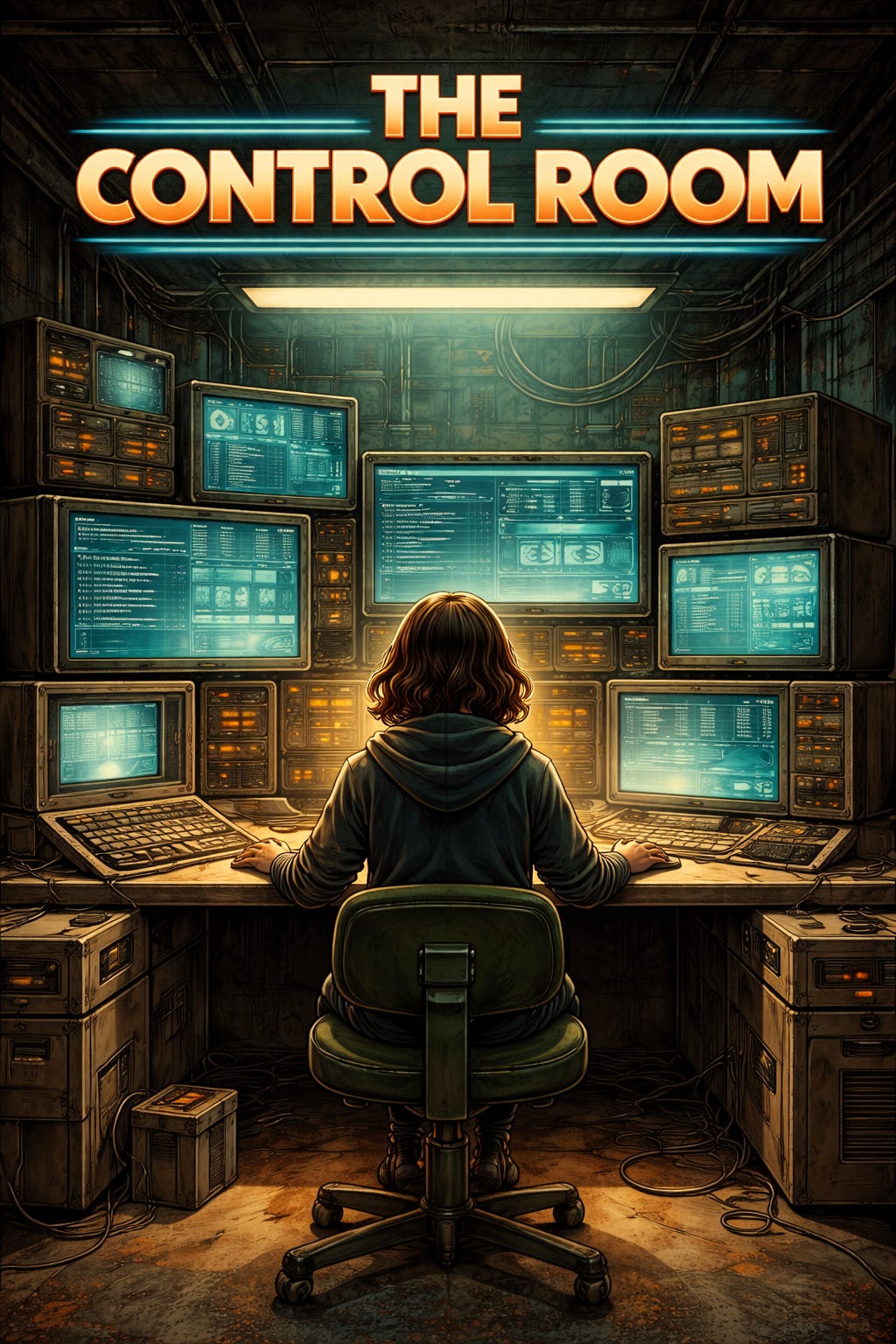
Larry White woke up at six-fifteen.
This was not because six-fifteen possessed any special significance in the grand cosmic machinery of existence, nor because it aligned with the sunrise, the tides, or the subtle gravitational nudging of distant moons.
Larry woke up at six-fifteen because six-fifteen was when Larry woke up. Except on the rare mornings when he woke up at six-fifteen and found himself mildly annoyed about it. Larry lay in bed for a moment, staring at the ceiling and listening to the house. Houses make decisions about noises in the morning. They consider creaks. They debate pipes. Occasionally they experiment with mysterious ticking sounds that cannot be traced to any known mechanism.
Larry listened carefully.
The house decided not to do anything unusual.
Larry approved of this.
He got up.
Larry shaved carefully, because shaving carelessly only created problems for the next day, and Larry believed firmly that the next day should never suffer for the mistakes of the previous one.
He made coffee. Larry had been making coffee the same way for seventeen years. It was not the best possible coffee. Experts would likely object to several aspects of the process. There were better beans, better temperatures, better machines. But Larry’s method produced coffee. It produced coffee every morning. Reliability, Larry believed, was the only truly meaningful characteristic of coffee.
He sat at the kitchen table with his mug and opened the newspaper to the same section he always opened first.
Starting anywhere else felt chaotic. Chaos, Larry believed, was vastly overrated.
After finishing his coffee, Larry checked the stove to make sure it was off.
It was. He checked again, and again. For good measure, he turned it on only to make sure it was turned off again. This was reassuring, although not surprising, as Larry had turned it off personally.
He put on his jacket and left the house.
Larry walked to work every day. The walk took twelve minutes if the crosswalk cooperated, fourteen minutes if the crosswalk did not, and fifteen minutes if Larry spent time considering whether it was worth being annoyed about the crosswalk.
He usually decided it was not.
His office sat in an unremarkable building inside an unremarkable office park, the sort of architectural arrangement designed by people who very strongly believed that buildings should avoid attracting attention.
Larry approved of this philosophy.
Attention, Larry believed, often led to expectations. Expectations led to complications. Complications led to meetings. Larry disliked meetings.
Inside the building was the Control Room. Larry had designed it himself. This was not because anyone had asked him to, nor because he believed the system required aesthetic refinement. It was because Larry believed that a workspace should encourage diligence and discourage ambition.
The walls were an extremely deliberate off-white. Not white, because white showed dirt. Not beige, because beige made people feel things. The lighting was fluorescent and perfectly even. The furniture was heavy enough that it discouraged rearrangement. Larry believed that furniture which encouraged rearrangement often led to the rearrangement of ideas, and the rearrangement of ideas often led to trouble.
At the center of the room was a single desk. There were several additional desks placed carefully along the walls. Larry had installed them because, theoretically, there might one day be other administrators. Larry did not expect this to happen, but he believed good systems accounted for theoretical possibilities.
Larry sat down, and he turned on the screens.
Then he checked the queue. The queue was Larry’s pride. Tickets came in. Tickets went out. Small errors were corrected. Minor inconsistencies were smoothed over. Occasionally something unusual would appear: a flicker, a delay, a pattern that did not resolve quite as neatly as expected.
Larry would pause. He would frown slightly. Then he would consult the manual. If the manual contained a solution, Larry would implement it with quiet efficiency. If the manual did not contain a solution, Larry would log the event, mark it as monitored, and continue with his day.
This also made Larry happy. Larry did not believe systems were meant to be explored. He believed systems were meant to be maintained. Systems, in Larry’s opinion, were like fences.
You repaired them so they would not fall down. You did not climb them.
Once a month, a new plaque appeared in the breakroom.
Employee of the Month — Larry White.
The frame next to it said the same thing. So did the next.
Ada had counted thirty-two before she stopped.
Larry never bragged about this, but he did straighten the frames when they hung slightly crooked.
Larry believed strongly in doing things properly. He had arranged a compensation agreement with the organization that ran the system. It paid for his house, his groceries, and his modest car.
It did not attract attention. Larry preferred arrangements that did not attract attention. Questions led to answers. Answers led to expectations. Expectations led to disappointment. This was a path Larry felt no need to explore. For decades, Larry White came to the Control Room.
He cleared the queue.
He logged the anomalies.
He kept the system running exactly as it had run the day before.
And this made him content.
Then one evening, Larry went to sleep. And did not wake up. There were no alarms. No alerts. No dramatic system message announcing the loss of the administrator.
The queue simply waited.
Systems, Larry believed, should be patient.
Ada Collins leaned back in the chair and stared at the ceiling of the Control Room.
Behind her, the soft hum of processors filled the air. Her interface, half finished, half experimental, and slightly illegal according to several menu warnings continued compiling quietly.
She glanced again at the wall of Employee of the Month plaques.
“Thirty-two months,” she muttered. “Why only thirty-two?”
She tried to picture Larry White. Not as a myth. Not as some mysterious architect of reality. Just a man who woke up at six-fifteen and believed beige walls were emotionally dangerous.
Ada tilted her head.
“A man who loved limits,” she said slowly.
Someone who built a room designed to keep curiosity from spreading. Because curiosity, Ada suspected, had probably never felt safe to him.
She imagined Larry standing in this exact spot. Looking at the same screens. Seeing the same system, and deciding that enough was good enough.
Ada frowned slightly.
If you built a fence, the first responsible thing to do was check what was on the other side. She spun the chair back toward the console.
“Did I nail it,” she asked the room, “or did I absolutely nail it?”
The screen paused.
A single line appeared:
OK
Ada snorted. Then she turned back to her code.
Life delayed this. Funerals and a funeral lower to upper respiratory, to ear infection.